Obby World: Parkour Escape
Coup Coup LTDAdventure
4.40.00 Reviews
- Version
- 0.0.7
- Installs
- 100.00K
- Age Rating
- Everyone
Screenshots
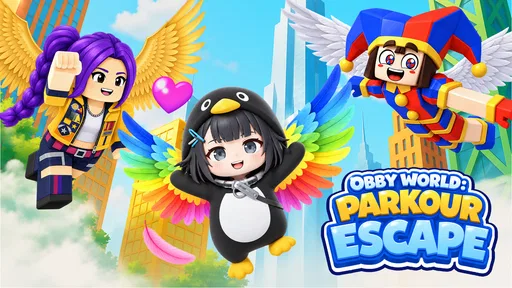
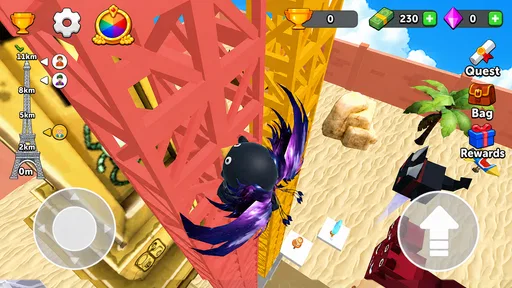

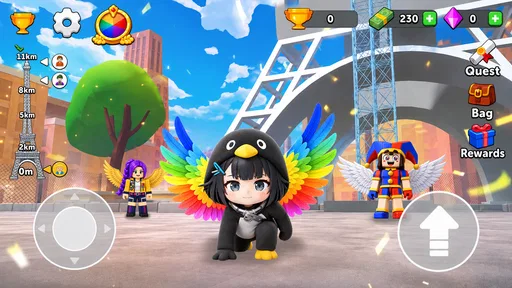
Our Review of Obby World: Parkour Escape
 Analysis by Appyee
Obby World: Parkour Escape is the kind of adventure game I open when I want a quick test of timing rather than a long story or complicated strategy system. Its basic appeal is easy to understand: move through obstacle-course environments, react to hazards, and keep trying when a jump goes wrong. I found the focus refreshing because it puts the challenge itself ahead of menus, lore, and heavy progression systems.
That simplicity also makes the game easy to approach. You do not need to learn a large set of rules before starting, and the Everyone age rating makes it suitable for a broad audience. At the same time, an obstacle game lives or dies by how fair its movement feels. A bright course is not enough if controls are awkward, checkpoints are unclear, or difficulty depends too much on surprise. My overall view is positive, but I would recommend it mainly to players who enjoy repeating short challenges and improving through practice.
What the obstacle-course design feels like in practice
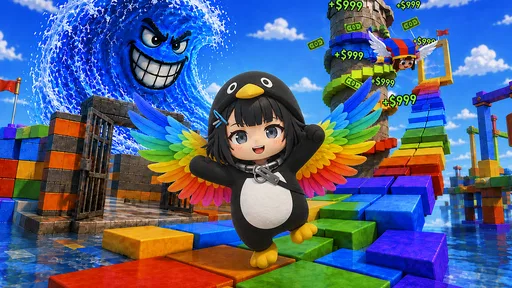
The game is presented as an adventure built around three recognizable challenge ideas: parkour routes, tsunami situations, and tower climbs. Those themes give the experience more variety than a single flat obstacle track. Parkour sections encourage careful movement, tsunami challenges add urgency, and tower-style courses make vertical progress feel like a goal in itself.
I like that combination because each type of challenge asks for a slightly different mindset. In a regular parkour section, I can concentrate on spacing and timing. When a tsunami threat is involved, hesitation becomes more costly and I have to commit to a route. A tower challenge changes my view of progress: instead of simply reaching the next platform, I am watching how far I have climbed and deciding whether a risky move is worth making.
The useful way to play is not to treat every failure as wasted time. I first watch the movement pattern, identify the safest landing area, and then attempt the section with a specific adjustment. That small habit matters in an obby game. Randomly rushing often produces the same mistake repeatedly, while a deliberate change in camera position or jump timing can reveal what was actually going wrong.
The strongest part of the experience is its short retry loop: fail, understand one mistake, and immediately try a cleaner route. This makes it a good fit for small breaks. I can play while waiting for an appointment or during a short commute without needing to remember a complicated plot. It also gives younger players a clear form of progress, since improvement is visible in the way they handle a course even when there is no dramatic story reward.
How I would approach the first sessions
For a new player, I would avoid trying to finish every section at maximum speed. The first few attempts are better used to learn how the character responds to direction changes, jumps, and camera movement. If a platform looks reachable but the landing keeps failing, the problem may be the approach angle rather than the jump itself. Moving slightly earlier, lining up with the center, or slowing down before the edge can make a bigger difference than frantic tapping.
I also recommend treating tower routes as exercises in patience. Vertical courses create a strong temptation to hurry after making good progress, but that is exactly when a careless move can erase the advantage of a careful climb. I prefer to pause briefly after a successful landing, check the next platform, and only then continue. That rhythm is slower, but it reduces the emotional pressure that makes players overcorrect.
Tsunami-themed sections deserve a different approach. I would not spend every attempt searching for the perfect route if the hazard is already forcing movement. Instead, I look for the most reliable sequence and accept that a slightly longer path may be better than a shortcut with a narrow landing. This is one of the game’s more interesting trade-offs: the fastest-looking route is not always the route that gives the best chance of finishing.
Progress, pressure, and the cost of a mistake
Obstacle games create pressure in a very direct way. A missed jump can interrupt a good run, and a high tower can make a late failure feel more painful than an early one. That pressure is part of the appeal, but it also determines who will enjoy the game. Players who like repeating a challenge until their hands learn the timing will probably find the loop satisfying. Players who want constant rewards, a relaxed pace, or a story that moves forward after every attempt may find it demanding.
My advice is to set small targets instead of thinking only about completion. Reaching one difficult platform consistently is meaningful progress. So is finding a safer way through a hazard section. This approach keeps the game from becoming a test of patience alone and turns each attempt into a useful experiment.
The free price makes trying the game straightforward. I can install it without committing money first, which is important for a short-form adventure title. However, free access should not automatically be treated as proof that the entire experience is free of spending pressure. The practical question is whether any optional purchase affects progress, convenience, or competition, and that is something I would check directly on the device before allowing a child to play unsupervised.
I would also avoid promising a specific spending experience to another player. The confirmed product details identify the game as free, but they do not establish a purchase structure that I can responsibly describe in detail. That means my recommendation is based on the playable obstacle-course concept, not on assumed extras, discounts, or a particular monetization design.
Fairness matters more than visual variety
For this type of game, fairness is more important than having a large number of decorative elements. A player can forgive a simple environment if every failure teaches something. They are much less likely to forgive a jump that feels inconsistent or a hazard that appears impossible to read. When I judge an obby, I pay attention to whether success comes from timing and positioning rather than luck.
The parkour, tsunami, and tower ideas naturally create different fairness questions. Parkour should reward controlled movement. A tsunami challenge should communicate enough urgency for the player to understand why a route failed. A tower should make its vertical layout readable so that the player can plan rather than blindly guess. These are the standards I would use while deciding whether the game deserves repeated play.
There is also a difference between difficulty and inconvenience. A hard jump can be satisfying when I know what I need to improve. A difficult section becomes frustrating when the camera hides the landing, the controls feel imprecise, or the restart process interrupts the attempt. Because the game is built around repetition, even small friction becomes noticeable after several failures.
That is why I would compare this title with other obstacle-course games based on control feel and course readability, not just on how colorful the world looks. A larger alternative may offer more modes or deeper customization, while a minimalist platformer may provide tighter precision. Obby World: Parkour Escape is more appealing when I want a recognizable mix of parkour, rising danger, and tower climbing in one accessible package. It is less convincing for someone searching for a competitive platformer with carefully documented rankings or a broad social ecosystem.
Who should play it, and who should skip it
I think the game suits casual adventure players, families looking for an approachable challenge, and anyone who enjoys learning movement through repetition. The Everyone rating supports that broad accessibility, while the straightforward obstacle-course premise avoids the steep learning curve found in more complex action games. It can also work well as a shared challenge between friends or family members, even if each person is simply taking turns attempting the same difficult section.
A realistic everyday use case would be a short evening break after work or school. I might play a few attempts, stop after reaching a new part of a tower, and return later with a clearer idea of what needs changing. The game does not require me to remember a complicated narrative, so returning after a day away is easy. That makes it more convenient than a story-heavy adventure when I only have a few minutes.
I would be more cautious about recommending it to players who dislike failure loops. If missing the same jump several times feels irritating rather than motivating, the central design may become tiring quickly. It is also not my first choice for someone seeking a deep campaign, character-building systems, or a clearly established competitive scene. A traditional narrative adventure would be better for story, while a precision platformer with a stronger focus on technical control may be better for players who want every movement tuned around high-level mastery.
Parents should judge the game not only by the age label but also by how the child reacts to repeated failure and any spending prompts that may appear during use. The age rating makes the content broadly approachable, but it does not remove the need for sensible device supervision. I would let a child try the obstacle courses, then check the game’s on-device purchase flow and settings before treating it as an unattended activity.
Developer, version, and practical expectations
Obby World: Parkour Escape comes from Coup Coup LTD. The current version is 0.0.7, which is worth keeping in mind when setting expectations. A version number at this stage suggests I should evaluate the game as an experience that may still be developing rather than assuming it already has the polish or breadth of a long-established platformer.
It supports devices running Android 8.1 or later, so compatibility is reasonably clear for Android users with older but still supported phones. Performance can still vary between devices, and I would keep other demanding apps closed if movement feels delayed. In an obstacle game, even a small amount of input lag can make a jump seem unfair, so checking the game on the actual phone that will be used is more useful than relying on the device’s age alone.
The game has reached over one hundred thousand installs and holds a 4.4 average from 125 ratings. Those figures suggest that it has attracted a meaningful early audience, but I would not treat them as a substitute for personal testing. A rating can indicate general appeal while still hiding the exact issues that matter to a particular player, such as camera comfort, restart speed, or tolerance for repeated attempts.
Its release date is April 28, 2026, and the early version context makes updates especially important to watch. I would pay attention to whether later releases improve clarity, add meaningful course variety, and smooth out any control friction. I would not assume that every future update will change the game in a particular direction; I would judge each one by how it affects the actual play loop.
What I would check before spending time or money
Because the game is free, my first test would be simple: install it, play several different challenge types, and decide whether the controls feel predictable. I would not make a purchase decision after only one successful run. The important question is whether the game remains enjoyable when the novelty fades and the course asks for repeated practice.
I would also check how clearly the game presents any optional spending. If a purchase appears, I would look at what it changes before accepting it, especially on a shared family device. I would not assume that an item makes a course easier, that it affects another player, or that it is necessary for progress unless the game explains that directly. This is a small but important habit in a free game: understand the exchange before treating it as part of the normal route.
Another useful check is whether the game remains comfortable during longer attempts. I would adjust the phone’s grip, keep the screen unobstructed, and avoid playing while walking or multitasking. Obby challenges reward attention, and trying to play with one hand while distracted can create failures that have nothing to do with the course design. That matters when deciding whether frustration comes from the game or from the situation in which it is being played.
My trust verdict after weighing the trade-offs
I come away viewing Obby World: Parkour Escape as a promising, accessible adventure game for players who enjoy obstacle courses more than elaborate stories. Its mix of parkour, tsunami pressure, and tower climbing gives the basic idea enough variation to support short sessions, and the free entry point makes experimentation easy. The broad age rating and Android compatibility also make it practical for many casual players.
My recommendation is conditional rather than automatic. I would choose it for a quick challenge, a family-friendly movement game, or a short routine built around improving one section at a time. I would skip it if I wanted a deep campaign, guaranteed competitive systems, or a mature platforming experience with extensive documentation and long-term progression.
The main trust point for me is transparency in expectations. I can confidently describe the game as a free adventure built around obstacle challenges, but I would not invent a purchase advantage or claim that spending is irrelevant without seeing the actual in-game flow. I would also remember that the early version may need refinement. Those cautions do not cancel the game’s appeal; they simply keep the recommendation honest.
For the right player, Obby World: Parkour Escape is an easy game to understand and a surprisingly demanding one to master. I would install it when I want immediate action, use careful observation instead of rushing, and decide after several attempts whether its movement feels fair on my device. If the controls click, the retry loop can be genuinely satisfying. If they do not, another platforming game with tighter precision or a calmer progression system will be the better choice.
Verdict
Strengths of Obby World: Parkour Escape
- Simple controls make the parkour mechanics easy to learn.
- Bright, playful visuals create an inviting atmosphere for younger players.
- Short obstacle sections are convenient for quick gaming sessions.
- Frequent checkpoints reduce frustration after difficult jumps.
- Different obstacle layouts help keep the basic gameplay varied.
Limitations of Obby World: Parkour Escape
- Some levels may feel repetitive after extended play.
- Precision jumps can be frustrating on smaller phone screens.
- Ads may interrupt gameplay or appear between attempts.
- Performance can vary on older Android and iOS devices.
- The game may offer limited depth for experienced platformer fans.
Similar Picks in This Category
View All
Roblox
Roblox Corporation4.2

Pokémon GO
Niantic, Inc.3.5

Ninja warrior: legend of adven
TOH Games4.6

Ninja Arashi
Black Panther4.6

Eyes - The Horror Game
Fearless Games sp. j.4.5

Critical Action:Gun Strike Ops
FPS Shooter & Action Game4.3
Frequently Asked Questions
What is Obby World: Parkour Escape?
Obby World: Parkour Escape is a platforming game built around obstacle-course challenges, commonly called obbies. Players guide a character through jumps, moving platforms, traps, narrow paths, and other timing-based sections while trying to reach the finish. Each stage tests reaction speed, movement control, and patience, making it suitable for players who enjoy short but demanding arcade levels.
Is Obby World: Parkour Escape suitable for children?
The game is generally easy to understand because its main objective is simply to complete obstacle courses and avoid hazards. However, some stages can be frustrating, especially for younger players who are still developing precise touch controls. Parents should also review the app’s store rating, advertising, in-app purchase information, and any online or social features available on their child’s device before downloading.
Does Obby World: Parkour Escape require an internet connection?
Whether an internet connection is required can depend on the version of the game and the features being used. Basic obstacle-course gameplay may work in some situations without a connection, but advertisements, updates, cloud features, rankings, or other online services may require internet access. It is best to check the current store listing and test the game after installation if offline play is important.
Is Obby World: Parkour Escape free to download and play?
Obby World: Parkour Escape may be available as a free download, but free access does not always mean the entire experience is completely without commercial interruptions. Mobile games can include advertisements, optional purchases, rewarded videos, or extra content that is unlocked separately. Before installing, users should check the official Google Play or App Store listing for the latest pricing and purchase details.
What should I know about the controls and difficulty?
The controls are designed for touchscreen play, usually requiring players to move, jump, and adjust their position while navigating platforms and hazards. Success depends heavily on timing rather than complicated commands. The early sections can help new players learn the mechanics, but later obstacles may demand repeated attempts and careful movement. A stable device and responsive touch screen can make the experience more enjoyable.
Play our best games!


